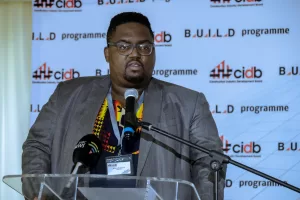
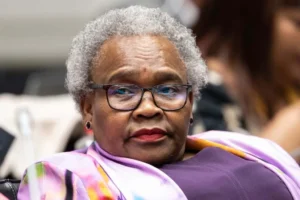
FILE PHOTO: ANCYL members attending a lecture. PICTURE: Supplied
 0
 0
The formation of the ANCYL followed a long protracted process of struggle in which all South Africans had bravely and heroically participated, writes MALUSI GIGABA
Its launch was occasioned by objective material conditions and served as a harbinger for a new phase of struggle which signalled the growing radicalisation of the black workers, urban and rural black communities and the youth in particular.
This new phase was to be characterised by mass mobilisation and more direct confrontation between the oppressed and the white supremacist regime. It grew militant with the evolving process of struggle and in response to the growing belligerence and brutality of the regime of terror.
Born Into Struggle, Catalysts Of The Revolution
From its inception, the ANCYL was thrust into the heart of a very difficult struggle and was preoccupied with three inter-related issues:
- First, the struggle of the African people as led by the ANC;
- Secondly, the ideological and organisational rebuilding and renewal, as well as the unity of the ANC, its injection with radical African Nationalism, imparting it with a “national character” and its transformation into a militant and united fighting organ of the oppressed ready to face the tyrannical regime and conquer it; and
- Thirdly, the role of the youth in the struggle under the banner of a united and radical ANC.
From its very inception, the founders of the ANCYL believed in the ANC as a vehicle for the unity of the African people in their struggle for freedom. They eschewed divisions and factionalism within the national movement, believing that these would detract from its historical mission. Throughout its history, the ANCYL has regarded it as one of its foremost duties jealously and steadfastly to safeguard and advance the “unity of purpose” and “unity in action” of the ANC.
Preoccupation with the questions of the future – what it will be, how it shall be achieved and which social forces shall be mobilised the best to achieve it – place the youth at the very centre of every nation’s endeavours.
The South African youth played a pivotal role in the popular uprising against apartheid colonialism.
In essence, every class or social stratum – indeed every society –invests in the younger generation, and its future for its own sustenance and survival.
The sustenance and perpetuation, indeed the propagation, of the ideas of any class and social stratum, as well as any movement or society, depends on this deliberate and conscious investment in the youth as the rising generation.
The South African revolutionary movement learned this truth about the role of the youth in the course of its struggle, particularly since the formation of the ANCYL. The South African youth played a pivotal role in the popular uprising against apartheid colonialism.
They were often thrust by history into a leading role, carrying on their shoulders the difficult burdens of the struggle and the nation, helping to provide answers to intractable questions and, in the process, committing death-defying feats that helped to propel the struggle.
At the same time, their active participation in the struggle taught youth important lessons about their role and place in history and exposed them to the fact that nothing in life is permanent. These historical lessons are not easy to learn; they cannot be taught to the youth in universities, but only from the vantage point of revolutionary action – praxis.
Youth, on their own, are not a social class but are very much a part of society and belong to social classes. They mirror the ramifications of the society within which they live and have similar social gradations as generally in society. The political outlook of each category of youth generally mirrors its social position, even though a political outlook contrary to its objective interests could be acquired.
That is why it is possible to find young workers, or black youth, supporting pro-fascist political organisations of white capital. Due to their inexperience and even illusions, youth can be easily swayed into positions or social and cultural value systems that are counter to their interests.
Accordingly, no revolution can be victorious without the effective education, organisation and mobilisation of the youth into political action. For, ultimately, the youth are the catalysts of the future of any people, class or stratum; their energy and dynamism give them an urge above all groups in the zealous pursuit of the ideas in which they believe.
Hence, within the different class formations, they are to be found in the front trenches of practical and theoretical struggles displaying both initiative and self-sacrifice; always eager to perform great feats in the theatre of battle. And this is also precisely why different political and social formations try so strenuously to win the support of the youth in order to sway them towards their own political and social outlook so that they guarantee their social and political interests.
Propagators Of Youth
Historically, particularly since the formation of the ANCYL, the ANC’s dynamism and adaptation to different phases of the struggle have been dependent on the youth as the spearhead of the new phases of the struggle. Because of their inherent nature, youth are able to both be the harbingers of changes in society and also help their societies adapt to the changes, no matter how radical.

It is precisely for this reason that the ANC has remained steadfast through a century of existence, dynamic enough to endure changes through time and remain relevant to all generations of South Africans, young and old. It is for this reason that all political parties in South Africa can be witnessed today targeting the youth with the intention to imbue them with their ideas and sway them towards their political beliefs and social outlook.
In the end, they hope to curtail the future of the ANC by dismantling its youth-nurturing system so that there are no worthy heirs to the future of the ANC imbued with its value system and socio-political outlook.
The ANCYL must not seek to become the parrots of the ANC leadership and enforcers of their acts of dividing the ANC.
This is why the ANCYL is called upon to zealously pursue unity in action and the political cohesiveness of the ANC. The ANCYL must not seek to become the parrots of the ANC leadership and enforcers of their acts of dividing the ANC. The ANCYL must fearlessly and ferociously represent – speak and act on behalf of the youth and their most militant and futuristic interests.
ANCYL founders in 1944 proclaimed it their mission to unite the ANC and defeat its fractious politics at the time the ANCYL was formed. Whilst condemning those pursuing divisions within the ANC, ANCYL founders pledged instead their loyalty to a united movement with a clear national character, able to unite the oppressed massed behind the vision of freedom. They pledged that they would never allow the struggles of their forebears to be in vain and that they would restore the unity, glory and sense of mission of the ANC.
This is the challenge facing the current generations of youth if they must be a potent weapon in the hands of the progressive revolutionary-democratic youth for total emancipation. ANCYL members must know that the ANC is the only political force with a genuinely historic mission to emancipate this country from the clutches of white supremacy.
To fulfil this historic mission, the ANC must be organisationally and politically united and cohesive. Unity is a conscious political act, not an act of convenience. For their own future, the ANCYL must seek the most principled unity of the ANC.
A New Value-Proposition
The ANCYL must thus act as a direct bridge between the youth and the ANC; to bring the youth into the ANC and the ANC to the youth. It has twin tasks to rally the youth into the struggle under the banner of the ANC and, at the same time, to champion their political and socio-economic interests. These twin tasks are not mutually exclusive, but their relationship is dialectical.
At a broader level, pursuing these twin tasks ensures that the ANCYL is not self-absorbed, that is, focused only on the political and socio-economic ambitions of its own members who, during this period of ANC-led governance constitute a part of the political elite.
Instead, it re-emphasises the three inter-related with which the ANCYL has been preoccupied from the outset, namely, the struggle of black people, and Africans in particular, as led by the ANC, the ideological and organisational rebuilding and renewal, as well as unity, of the ANC as well as the role of the youth in the struggle under the banner of a united and radical ANC.
Secondly, and given its unique character, the pursuit of these twin tasks places the ANCYL as the leader of the progressive youth movement in our country and as such, it must be conscious of the imperative to exercise this leadership at all times, drawing into its ranks and becoming the repository of the best youth in our society.
Rallying the youth into struggle therefore benefits the movement, the social motive forces it leads as well as the struggle as a whole. It guarantees all of the above elements the sustenance of their ideas among the rising generation, without which the struggle would lack dynamism and a futuristic outlook, and, at worst, could eventually become hijacked if the youth do not imbibe a progressive outlook.
As already stated above, youth involvement in the struggle ensures that they are also able prominently to highlight their own socio-economic interests as young people, as a sector, in a society still recovering from a history of concerted attacks on the youth because of the role they had played in the offensive against racial tyranny.
The very future of our country requires that particular and rigorous attention be paid to raising the capacity and all-around competencies of the youth. This is so that they are prepared today for their future role at the helm of our society and the profound social changes it must still undergo towards a national democratic future.
The focus of the ANCYL must be the youth’s interests as a whole, not the political elite among the youth.
For, in fighting against the scourge of unemployment, lack of skills, and poverty and for access to education and other social rights, in championing their sectoral access to, participation in and empowerment for new challenges such as the fourth industrial revolution, the youth are raising the level of the struggle into a new pedestal. Fighting for total emancipation from the scourge of colonial bondage requires that all-rounded cadres are ready to pick the baton up from the older generations and carry it onwards.

Drawing the youth into politics must happen both through direct recruitment into and participation in the structures of the ANCYL behind its own programme of action, but also into the ANC so that they early on learn this idea that their own interests as youth are not separate or parallel from, but are instead integral to, those of the broader masses of the people.
At the same time, the ANCYL must fight consistently and vociferously for youth representation and participation in the structures of policy / legislative formulation and governance, under the banner of the ANC. However, youth inclusion must not become a narrow agenda for political patronage targeted at elite youth.
It must be about the inclusion and involvement of the broadest sections of the youth in every facet of our society, that is, politics, the economy, social, academic and other structures.
As well as the above, the ANCYL must be able to organise and harness young deployees, including those deployed in the national, provincial and municipal executives around the implementation of youth-specific and biased programmes.
Furthermore, the ANCYL must be able, through organisational strength and hegemony, to lobby ANC branches and Government structures behind the implementation of youth programmes. The primary purpose of youth mobilisation must not be for the narrow purpose of mere representation of leading ANCYL members in governance structures, which would simply signify and entrench patronage, but for revolutionary participation and ideological education and grounding of the youth.
The focus of the ANCYL must be the youth’s interests as a whole, not the political elite among the youth.
Above all else, the ANCYL must be zealous in sharpening, cultivating and harnessing cohesion among youth behind the programme for total emancipation, what the ANCYL refers to as “economic freedom in our lifetime”. Of course, this will require that the new leadership of the ANCYL must develop a coherent strategy for radical economic transformation.
This strategy will take RET beyond a meaningless slogan into a practical strategy for finally eradicating the final vestiges of apartheid-colonial social and economic relations of production. The ANCYL must lead in this strategy and etch the mission of their generation on this strategy which must extend beyond merely calling for the nationalisation of the mines and strategic sectors.
The ANCYL, therefore, needs to develop new, modern and creative methods of mobilising, educating and organising the youth, targeting all the critical sectors of the youth – young workers, students, young professionals, rural youth and others.
The ANCYL organisational strategies must take into consideration the fact South African society is getting highly urbanised and thus most youths are to be found in urban areas – suburbs, townships and informal settlements.
Accordingly, it is imperative to intensify the ideological and class mobilisation and education of the youth, and especially of the ANCYL leadership from branches upward in order to raise their level of national and class consciousness and hence prepare them for their role in the pursuit of total emancipation, without which the NDR would not be complete.
Conclusion
Rebuilding the ANCYL is an urgent strategic priority for the ANC itself. Success in this regard ensures not only the resonance of ANC views among the youth but, above everything else, guarantees the ANC its future.
Two decades after the advent of democracy in our country, the ANCYL must question the reasons for its existence, the role and place of the youth in struggle as well as the environment in which it must carry out its historic tasks.
As it does so, it must locate its own role within the ANC, in society and among the youth. It must re-establish itself as the authentic voice of the youth, the harbinger of changes in the revolutionary process as well as the microcosm of the future. The ANCYL must strive to offer a different value proposition to the ANC, the South African youth and the public.
Towards this end, it must pay attention to the tasks outlined above, conscious of its role as an organisation of young revolutionary democrats of the movement and confident of the continued support of the South African youth for the national democratic revolution.
Gigaba is a former ANCYL president, deputy minister and minister as well as the current ANC NEC member.
Disclaimer: The opinions expressed in this article are those of the authors. They do not purport to reflect the opinions or views of the Republic Mail and its associates.


About Author