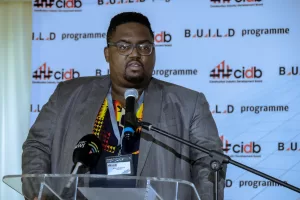
FILE PHOTO: cidb CEO Bongani Dladla during the launch of the BUILD Programme in Pretoria. PICTURE: Supplied
 0
0  0
0 Pretoria: Empowering Emerging Contractors and Fostering Skills for a Prosperous Tomorrow.
On March 14, 2024, the cidb launched the BUILD Programme, aimed at supporting the emerging contractors and youth entering the construction industry. This initiative ensures they possess the necessary skills for success.
Large contractors and professionals in the built environment play a crucial role in guiding newcomers, offering opportunities for learning and growth, especially through partnerships with TVET colleges and other educational institutions.
“We’re launching a program already in motion, not making empty promises,” emphasized Khulile Nzo, cidb’s board chairperson, highlighting the program’s active nature. Nzo further stressed, “If you want to build a country, invest in those who build it.”
The BUILD Programme has already benefited various entities, including UJ and Wits centers of excellence, among others. Nzo highlighted the importance of collaboration and innovation in overcoming industry challenges, asserting, “This programme represents a collective effort to address the challenges we face and to capitalize on the opportunities that lay ahead.”
The BUILD Pprogramme necessitates contributions from private and public sector clients to the BUILD fund, facilitating industry-wide development beyond individual projects.
During the launch, it was announced that R99 million had been collected, with SEFA committing to match up to R150 million, of which R200 million will be reinvested in industry development and training.
cidb CEO Bongani Dladla stressed the importance of adhering to cidb Act standards, which prioritize skills development. Dladla noted a shift towards proactive development efforts alongside regulatory functions, stating, “In the past, the cidb mainly focused on its regulatory aspect and conducting risk mitigation on behalf of their infrastructure clients. With the launch of the BUILD Programme, they are taking a new turn as they will be strongly implementing the development component into action through the support of the ministry.”
Testimonials from industry players like Ziyanda Binqela of VP Electrical Contractors and Professor Clint Aigbavboa underscored the program’s positive impact, especially in skills training and academic support.
Deputy Minister Swarts commended the program’s launch, citing its contribution to national unity and economic empowerment. She highlighted the program’s role in fostering exclusivity and driving development across various sectors, stating, that “we must take pride in the creation of a truly united non-racial, non-sexist, equal and prosperous society from a history of division and exclusion.”
The BUILD Programme aims to enhance exclusivity in the construction industry, particularly for women and youth. It provides a framework for integrating development goals into infrastructure projects at all levels.
Guidelines provided by cidb ensure that development and skills standards are integrated into procurement processes for public sector projects. The Department of Public Works and Infrastructure leads the program’s implementation in its projects.
“In its initial stages, the program has trained women-owned contractors and plans to expand this initiative to include more participants over the coming years,” stated Deputy Minister Swarts. Collaboration with SEFA ensures financial support for emerging contractors through the BUILD Fund.
cidb’s partnership with universities like UJ and Wits fosters research and academic capacity-building, crucial for the industry’s future sustainability.
“The BUILD Programme should be seen as the cornerstone of the transformation of the construction industry,” remarked Swarts, “as it encourages exclusivity and development of skills in the youth and women in construction that exist in an industry previously dominated by males.”
The BUILD programme oversees the transformative shift, promoting exclusivity and skills development, vital for industry growth and economic recovery.


About Author