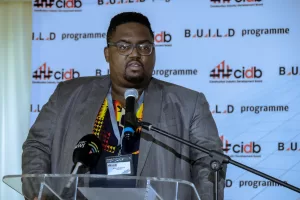
FILE PHOTO: Sisa Ngebulana, founder and CEO of Billion Group. PICTURE: Supplied.
 0
0  0
0 These triple challenges can only be addressed head-on through economic development, writes MASIBONGWE SIHLAHLA
Poverty is our biggest enemy in this country. It goes hand in hand with unemployment, especially youth unemployment, which is 60% in some areas, and inequality.
These triple challenges can only be addressed head-on through economic development. But the poor cannot only be receivers of benefits when we have more than 16 million people receiving state assistance in the form of social grants.
Our people need to be active participants in the economy of this country through useful employment, which would give them dignity, as envisioned by late former President Nelson Mandela.
At a Convention of a Democratic South Africa (CODESA) conference, Reconstruction and Development Programme (RDP) and Black Economy Empowerment (BEE) were accepted as guiding principles in our Constitution.
However, when the first democratically elected government implemented them and other visionary policies, which are now bearing fruits of many years of policy implementation, there are reactionary monopoly capital forces who want to put a damper on things.
The Afrikaners first gained economic power, followed by political power, thanks to the Broederbond, which enabled them to get their hands on the levers of state power.
This is the current situation in our country as BEE and those black businessmen and women who have benefitted from it are using BEE to render assistance to previously disadvantaged black communities in order to promote sustainable development at a grassroots level.
Black business owners, in line with Mandela’s vision, are undoubtedly committed to the economic empowerment of blacks who have suffered the most nearly 50 years under Apartheid and colonialism, and occupation.
Black corporates have given a new meaning to the concept of Corporate Social Responsibility (CSR). Enthusiastically, aligning it with Tata Madiba’s vision, they have enriched the lives of black communities tremendously through this form of outreach; they have empowered and uplifted black communities.
By ‘black,’ I refer to all those who have suffered under the Apartheid. We must not forget that white women too were restricted to many rights under the Apartheid.
Madiba was the first to realise that black companies should regard social problems in black communities as their CSR and are best placed to make a difference far quicker than the government, which is regulated by many cumbersome rules of engagement.
Fortunately, most, if not all, black business leaders have not only adopted this realisation of his but also made many inroads in fighting both poverty and unemployment and uplifting whole communities through their philanthropy.
One of the sectors of black social responsibility generosity is the education sector. Some black foundations have built schools while others have paid for extra teachers to build laboratories.
We have thus a clearly defined programme of action to make a real dent in black poverty and inequality. This programme is highly successful and is making a difference in the lives of black people.
This programme is driven by individual black business leaders who accepted their responsibility to spread the wealth of this country to all who live in it, but the priority is for those who have suffered for so long under the Apartheid to benefit.
Due to its success, the programme has drawn the attention of reactionary forces. It is worth to remember that black people are the majority in this country, but they have not had significant political clout, as the real power has always lied with international monopoly capital.
Blacks can only have real power through economic power, as did the Afrikaners. However, the Afrikaners could only lift the yoke of international monopoly capital from their necks when they acquired economic power through companies such as Sanlam, Santam, Federale Volksbeleggings and others.
The reactionary forces were quick to respond and applied a well-tried-and-tested strategy to undermine black economic success, that is, through a smear campaign and a character assassination.
When certain factions within the National Party (NP) wanted to get rid of Jaap Marais, they started a smear campaign, spreading rumours in the media. This tactic is still being used to this day.
Many reputable black businesspeople who have made a significant impact to eradicate black poverty have become the victims of a vicious and malicious smear campaign. Various media houses with social media presences have been co-opted to undermine black business leaders who dare to empower black communities.
Those often targeted are funding various upliftment projects because their interest is not to get tax rebates, albeit they are entitled to, and publicity, but to genuinely extricate the blacks from poverty.
Black businesspeople have not used projects to uplift poor communities as marketing exercises and to get free public relations (PR) mileage in the media, but to genuinely uplift the lives of poor blacks in the townships where many still stay in shacks.
***Sihlahla is an independent writer and political analyst. He is also the founder and chairman Concerned Young Peoples Forum of South Africa
Disclaimer: The opinions expressed in this article are those of the authors. They do not purport to reflect the opinions or views of the Republic Mail and its associates.


About Author